

How a Paper-Based Inspection System Led to a Costly Compliance Audit
Many fleets still rely on handwritten inspection sheets to meet NSC Standard 13 and related safety requirements. Research shows that nearly four out of ten fleets continue to depend on paper forms, even though manual records are one of the most common causes of incomplete documentation, missing signatures, and late submissions.
One compliance representative learned this lesson in the hardest way possible. For years, the team believed their paper-based process worked well enough. Drivers filled out their daily pre-trip inspections; supervisors collected sheets, and managers stored everything in crowded filing cabinets. Nothing seemed urgent until an auditor asked for three months of inspection history.
At that moment, the weak spots in their manual workflow surfaced all at once.
What Did Day-to-Day Paper Inspections Really Look Like?
Days began with drivers completing inspections in their vehicles. Some wrote in poor lighting. Others filled out forms in rain or snow. By the time the sheets reached the office, they had already passed through multiple hands. Pages were torn, unreadable, or missing.
A senior compliance supervisor described the process clearly:

“Everyone tried their best, but the stack of forms on my desk kept growing. Every week, I spent hours calling drivers, searching for missing pages, and trying to understand what actually happened on the road.”
Digitize Your Inspections Now >
Across the industry, fleets that still rely on manual inspections lose an estimated three to five hours per driver per week to paperwork, corrections, and filing. For a larger fleet, this becomes a heavy operational burden and a constant risk for non-compliance.
This was the state of the system when the audit began.
Why do paper-based fleet inspections create daily operational problems?
Paper inspections are often completed in poor conditions, damaged in transit, or passed through several hands before reaching the office. Compliance teams then spend hours each week calling drivers, correcting paperwork, and reconstructing events. Fleets that rely on manual inspections typically lose three to five hours per driver per week to paperwork alone, which increases administrative workload and raises compliance risk before an audit even begins.
Why Do Paper-Driven Workflows Create So Much Inefficiency?
Paper forms are simple to start with, but the flaws show quickly.
Drivers often avoid filling long forms when the weather is bad. Mechanics misplace sheets. Compliance staff must chase missing signatures or ask drivers to rewrite unclear sections. No information updates automatically. Nothing is synchronized. As a result, records become scattered across desks, clipboards, and filing cabinets.
When the audit team began reviewing documents, the inconsistencies became impossible to hide. The lack of a reliable trail turned a small compliance question into a large-scale review.
The true cost appeared in the form of lost time, delayed responses, and administrative stress. Weeks were spent stitching together incomplete records, tracking down handwritten pages, and explaining gaps that should never have existed.

What Happens When Compliance Breaks?
The audit escalated quickly. What started as one missing inspection sheet became a deeper investigation into the entire documentation process. Once the auditor identified inconsistencies, the team had to provide complete inspection records, defect reports, and repair information.
The consequences were severe.
The company faced a penalty of $ 90,000, significant pressure from regulatory authorities, and a near halt in operations while the compliance team tried to rebuild their records. Staff described the experience as one of the most stressful periods in their operational history.
The fine was not the only cost. The team realized that their paper-based system had been failing quietly for years and that the audit simply brought those failures into daylight.
“Proper inspections, repairs, and maintenance are essential to the safe operation of commercial motor vehicles.”
Source: Federal Motor Carrier Safety Administration (FMCSA), U.S. Department of Transportation
How Does Titan GPS FieldDocs Prevent Compliance Nightmares Like This?
After the audit, the company rebuilt its entire inspection workflow. The most important change was moving from handwritten paperwork to Titan GPS FieldDocs, a digital inspection platform that replaced every form with a reliable mobile process.
This shift removed the weak points the audit exposed. No more piles of paper. No more missing records. No more compliance gaps waiting for an auditor to uncover.
FieldDocs turns every pre-trip and post-trip inspection into a digital record that uploads automatically and stays organized in one system. For a fleet that had lived through a compliance failure, this was a turning point.
How does Titan GPS FieldDocs help fleets avoid compliance failures
Titan GPS FieldDocs replaces paper inspection sheets with a digital, mobile process that captures complete pre-trip and post-trip records in real time. Inspections upload automatically, stay organized in one system, and include mandatory fields that prevent missing details. By removing paper, FieldDocs eliminates lost forms, unreadable entries, and gaps in documentation that often trigger audit problems.
What Makes Real-Time Digital Inspections More Reliable Than Paper?
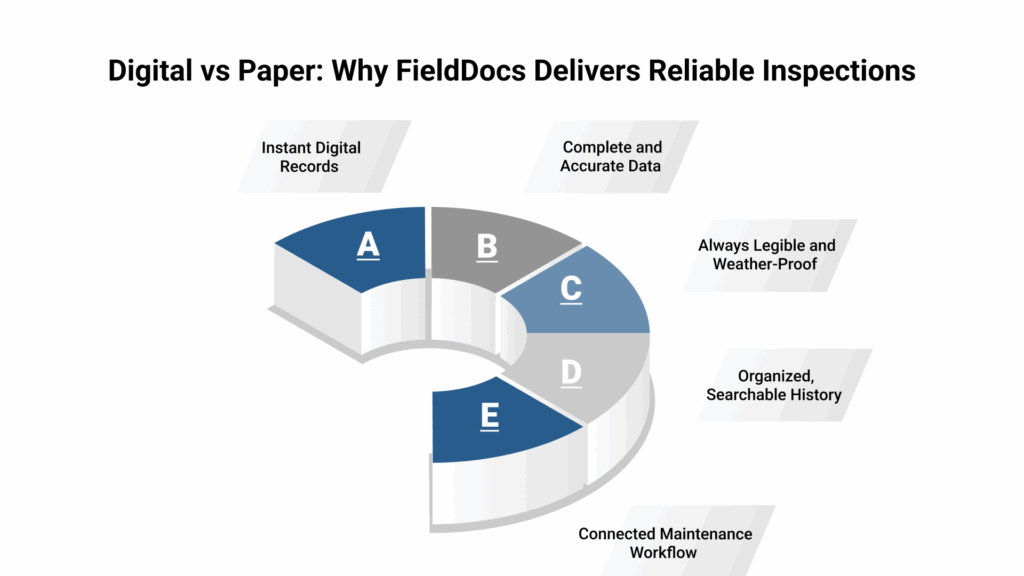
FieldDocs addresses each specific failure point of manual inspections.
- Instant digital records
Inspections upload as soon as they are completed. No form can be lost or delayed. - Mandatory fields ensure complete documentation
If a driver skips a required item, the appprompts for correction before allowing submission. - Clear, legible information
Digital entries remove issues caused by handwriting or weather damage. - Centralized compliance history
All inspections, defect notes, and maintenance confirmations stay organized in one dashboard. During an audit, every document is searchable and ready. - Cleaner workflow for drivers and mechanics
Inspections connect directly to repair tasks, so nothing gets missed in the transition between departments.
Within the first six months of adoption, the fleet reduced inspection administration time by over 60 percent. More importantly, missing documentation nearly disappeared, and audit exposure dropped to a controlled, manageable level.
What Is the ROI of Moving From Paper to FieldDocs?
Digital inspections remove many hidden costs that paper creates. The contrast looks like this:
| Cost Area | Paper-Based Workflow | With FieldDocs | Impact |
| Weekly admin hours for compliance | 3 to 5 hours per driver | Less than 1 hour | Major time savings |
| Missing or incomplete records | Frequent | Rare | Lower audit risk |
| Driver resistance | High | Lower | Simpler workflow |
| Audit preparation workload | Weeks | Hours | Faster turnaround |
| Probability of fines or penalties | High | Near zero | Direct financial protection |
For the audited fleet, the savings from reduced administrative work alone covered the cost of FieldDocs within one year. The protection against penalties provided even greater long-term value.
Digital inspections did not only solve a compliance problem. They created a stronger, more reliable system that the entire fleet could trust.
Key Takeaways
- Paper inspections create silent compliance gaps that surface during audits.
- Manual workflows waste hours each week and slow down teams.
- One missing form can escalate into a costly full-scale audit.
- Titan GPS FieldDocs removes paperwork risks with real-time digital inspections.
- Fleets see major ROI through reduced admin time and stronger audit readiness.
How Can Fleets Strengthen Compliance Before the Next Audit?
Most compliance failures grow slowly. A missing signature here. A lost form there. A damaged sheet that no one replaces. Over time, these issues build gaps that come to the surface only when an auditor starts asking questions.
FieldDocs helps fleets close these gaps early.
If your team still manages inspections on paper or spends hours sorting through forms each week, this is the right time to consider a digital system.
Titan GPS offers two immediate next steps:
- Request a FieldDocs demo
See how digital inspections work in real time and understand how they fit into your compliance process. - Download the Fleet Compliance Checklist
A quick guide that helps managers confirm alignment with NSC Standard 13, CFR inspection requirements, and audit readiness.
Strong compliance starts long before the audit arrives. The sooner fleets replace paper with a digital inspection system, the stronger their documentation becomes.
Frequently Asked Questions
What causes most compliance audit failures in fleets?
Audit failures often happen because of missing, damaged, or incomplete inspection records. Paper-based workflows create gaps that prevent fleets from proving compliance when documentation is requested.
How do digital inspections reduce audit risk?
Digital inspections create complete, time-stamped records with mandatory fields, automatic uploads, and centralized storage. This removes manual errors and gives fleets a clear audit trail.
Is Titan GPS FieldDocs aligned with NSC Standard 13 and CFR inspection requirements?
Yes. FieldDocs supports digital inspections that meet the documentation and reporting requirements of NSC Standard 13 and CFR Section 396 for pre-trip and post-trip inspections.
Can digital inspections reduce administrative work?
Yes. Fleets commonly report a reduction of more than 60 percent in inspection-related admin time after moving away from paper.


