

Cross-border freight between Canada and the United States drives a major share of North American trade. Every day, thousands of trucks move essential goods worth billions of dollars across checkpoints like Windsor–Detroit and Peace Bridge. For Canadian fleets, this is both an opportunity and a challenge. Managing schedules, paperwork, and compliance across two countries requires precision and constant awareness.
This guide helps Canadian fleet managers understand the realities of cross-border operations, the regulations that apply, and how Titan GPS supports compliance and efficiency from dispatch to delivery.
Why Cross-Border Compliance Matters in 2026
Operating across international borders is no longer just about getting cargo through customs. It now involves strict electronic logging, emissions standards, and integrated reporting systems that connect directly to both the Canada Border Services Agency (CBSA) and U.S. Customs and Border Protection (CBP).
According to Transport Canada, nearly 30,000 trucks cross the Canada–U.S. border each day, transporting an estimated $1 billion worth of goods between the two countries. That volume creates heavy traffic at crossings where wait times can easily stretch beyond an hour. Each idle hour costs fleets an average of $100 to $150 in fuel and wages. Longer queues mean tighter schedules, higher stress for drivers, and increased operating costs.
Maintaining compliance with ELD, IFTA, and Hours of Service (HOS) regulations is not optional. Fines, inspection delays, and suspended clearances can disrupt entire delivery chains. The ability to plan ahead, monitor activity in real time, and document every crossing accurately is now essential for profitability and reputation.
Pro Tip: Equip drivers with digital tools that automate paperwork and track compliance to reduce fatigue, save time at borders, and keep every trip on schedule.
What Are the Biggest Challenges for Canadian Trucking Companies?
Cross-border fleet management introduces several operational and human challenges that domestic operations rarely face. Below are the most common issues and how they affect performance.

Pro Tip: Use digital tools and real-time tracking to cut delays, stay compliant, and keep drivers safe.
Border Wait Times and Lost Productivity
Major crossings such as Windsor–Detroit, Peace Bridge, and Blue Water Bridge experience consistent congestion.
| Factor | Estimated Impact |
| Average wait time (peak hours) | 60–75 minutes |
| Cost per idle hour | $100–$150 |
| Share of delayed shipments | 20–25% annually |
Each minute of delay can affect delivery windows, driver schedules, and customer satisfaction. For fleets handling perishable goods or pharmaceuticals, the losses compound quickly.
Regulatory Compliance and Reporting Requirements
Canadian fleets must follow rules set by both countries. These include:
- CBSA and CBP Documentation – Proper cargo manifests, PARS/PAPS labels, and pre-arrival submissions are mandatory for every shipment.
- Electronic Logging Devices (ELDs) – Canada requires certified third-party ELDs, while the U.S. uses FMCSA-approved devices under different technical standards.
- International Fuel Tax Agreement (IFTA) – Fleets must report mileage and fuel usage by jurisdiction each quarter.
- Hours of Service (HOS) – Each country enforces unique rest and drive-time limits.
- FAST (Free and Secure Trade) – Enrolling in this trusted trader program speeds up border processing for approved carriers and drivers.
Failure to comply can result in penalties exceeding $1,000 per violation and cause immediate inspection of holds.
Communication Barriers Across Borders
When trucks cross into the United States, network switching often disrupts real-time communication. Drivers may experience dropped calls or delayed data uploads due to roaming coverage gaps.
Dispatchers must ensure their communication systems handle cross-border transitions smoothly. Many fleets also train drivers to communicate effectively with U.S. customs officers and customers, especially when handling bilingual documentation or varying terminology.
Reliable communication tools, backed by a telematics system that stays online across regions, are vital for continuous coordination and safety.
Technology Integration Gaps
Telematics platforms often perform well domestically but struggle when data passes between different reporting standards or government systems.
Common pain points include:
- Inconsistent GPS signal accuracy along border routes
- Difficulty syncing data to CBSA or CBP databases
- Lack of automated customs reporting capabilities
Cross-border operations need unified data handling across all regions. A compatible system should manage trip records, location updates, and compliance forms automatically to avoid double entry or manual corrections.
Driver Fatigue and Human Impact
Cross-border routes are long, repetitive, and heavily regulated. Drivers often manage inspections, paperwork, and strict deadlines while adjusting to different road conditions. The result is stress, fatigue, and potential safety risks.
According to the FMCSA, fatigue contributes to nearly 13% of large-truck crashes. Extended border waits and inconsistent rest schedules make this issue worse. Carriers that support their drivers with better planning tools and clear digital checklists reduce fatigue-related incidents and keep morale high.
How Can Fleets Streamline Cross-Border Operations?
Building a reliable cross-border process means balancing preparation, technology, and training. The following best practices can help Canadian fleets maintain compliance and reduce downtime at the border.
Use GPS and Telematics for Route Optimization
Real-time tracking helps dispatchers identify border congestion early and redirect vehicles before they get stuck in traffic. Telematics data also support accurate HOS calculations and provide proof of compliance during inspections.
Digitize Documentation
Manual paperwork is a common cause of delay and error. Electronic systems reduce the risk of missing forms and speed up customs processing.
Digital ELDs and tools like Titan GPS FieldDocs let drivers complete inspection reports, DVIR forms, and trip records directly from their devices.
Plan Ahead with Wait-Time Forecasting
CBSA and U.S. DOT websites publish live border wait times and route updates. Dispatchers who monitor this data can adjust schedules or select alternative crossings. Combining these insights with GPS data minimizes unnecessary idling and improves delivery predictability.
Train Drivers for Cross-Border Procedures
Drivers should understand customs inspection routines, FAST lane eligibility, and cargo classification codes. Training should also include how to manage digital documentation, handle questions from customs officials, and prepare vehicle inspection reports correctly.
A confident driver at the border not only speeds up processing but also strengthens the fleet’s compliance track record.
Monitor Emissions and Maintenance Compliance
Each country has distinct environmental and vehicle maintenance standards. Regular preventive maintenance ensures vehicles meet both Environment Canada and EPA guidelines. Well-maintained trucks are less likely to fail roadside inspections, which could otherwise cause costly delays.
Stay Informed About Policy Changes
CBSA, FMCSA, and Transport Canada frequently update requirements around security, emissions, and HOS reporting. Assigning a compliance officer or using an automated update feed helps fleets stay ahead of changes before they impact daily operations.
Pro Tip: Combine real-time tracking, digital records, and driver training to keep your fleet compliant, efficient, and moving smoothly across the border.
How Titan GPS Supports Cross-Border Compliance
Titan GPS helps Canadian trucking companies simplify every stage of cross-border fleet management. Its tools are designed to keep vehicles compliant, visible, and efficient without adding manual work for dispatchers or drivers.
ELD Compliance and HOS Reporting
Titan GPS integrates with certified Electronic Logging Devices that meet both Canadian and U.S. requirements.
All driving hours, rest periods, and location data are logged automatically. Dispatchers can review HOS summaries anytime to prevent violations before they occur.
Digital logs make inspections faster and help fleets avoid costly paperwork mistakes or fines.
Real-Time GPS Tracking and Geofencing
With Titan GPS, dispatchers can monitor vehicle movement in real time and set geofences around key border crossings.
As trucks enter or leave these zones, automatic notifications confirm arrival and departure times. This visibility improves accuracy in reporting and supports better coordination between dispatch, shippers, and customers.
Automated Arrival and Departure Notifications
Instead of relying on manual check-ins, Titan GPS automatically sends alerts when a truck crosses a predefined point.
This feature reduces communication delays, shortens response times, and provides proof of delivery for time-sensitive loads. It also helps identify repeated congestion points for future route optimization.
Integration with Customs and Reporting Systems
Titan GPS reporting tools make it easier to generate IFTA fuel summaries, trip reports, and compliance records.
Fleet managers can export data directly into audit-ready formats that align with CBSA, CBP, and FMCSA expectations.
This integration eliminates duplicate data entry and ensures every trip has a clear, traceable record.
What Results Can Fleets Expect with Titan GPS?
Titan GPS not only streamlines compliance but also helps fleets recover lost time and cost from inefficient processes. Here are some before and after metrics for users who have adopted Titan GPS:
| KPI | Before Titan GPS | After Implementation |
| Average Border Delay | 75 minutes | 45 minutes |
| Missed Deliveries | 18% | 9% |
| Compliance Violations | 3 per quarter | 0–1 per quarter |
| Driver Fatigue Incidents | 14% | 7% |
These gains come from consistent visibility, accurate data, and less manual coordination. Over time, improved compliance and planning translate into higher customer satisfaction and stronger profit margins.
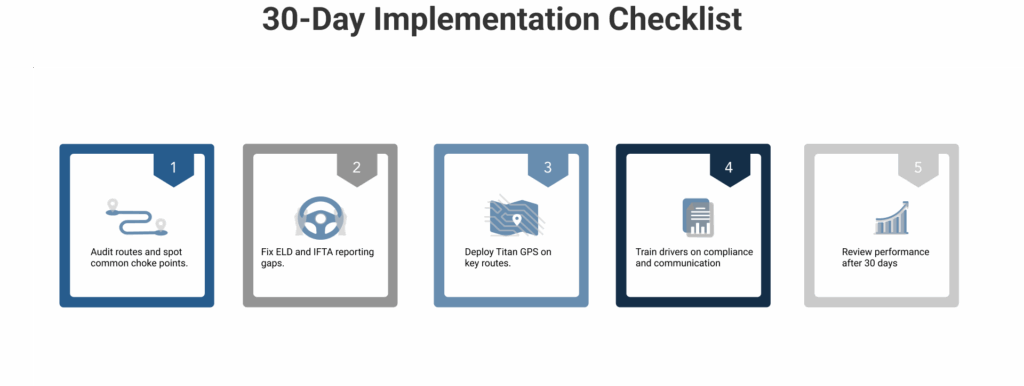
Driving Compliance and Confidence Across Borders
Cross-border operations require a balance between precision and speed. When paperwork, routes, and compliance are automated, fleets spend less time waiting and more time delivering.
Titan GPS provides the technology backbone that allows Canadian carriers to manage routes, documentation, and safety from a single, reliable system. Whether a shipment moves from Toronto to Detroit or Vancouver to Seattle, every crossing becomes faster, cleaner, and more predictable.
Request a Demo to see how Titan GPS can help your fleet simplify cross-border operations and maintain complete compliance with every trip.
Frequently Asked Questions
How do ELD rules differ between Canada and the United States?
Canada requires third-party-certified ELDs and enforces slightly different rest-time allowances compared to FMCSA rules in the United States. Titan GPS ELD integrations meet both standards for seamless operation across borders.
What is the FAST program and who qualifies?
The Free and Secure Trade (FAST) program allows pre-approved carriers and drivers to use dedicated lanes for faster inspections. Applicants must pass security checks and maintain strong compliance records.
Does Titan GPS store data during cross-border trips?
Yes. Titan GPS records trip location, mileage, and compliance logs on secure Canadian-based servers. Fleets can access these records anytime for audits or reporting.
How does Titan GPS help with DVIR and maintenance documentation?
Using Titan GPS FieldDocs, drivers can complete digital vehicle inspection reports that sync automatically with the fleet’s database. This ensures maintenance issues are tracked, resolved, and ready for compliance review.


