
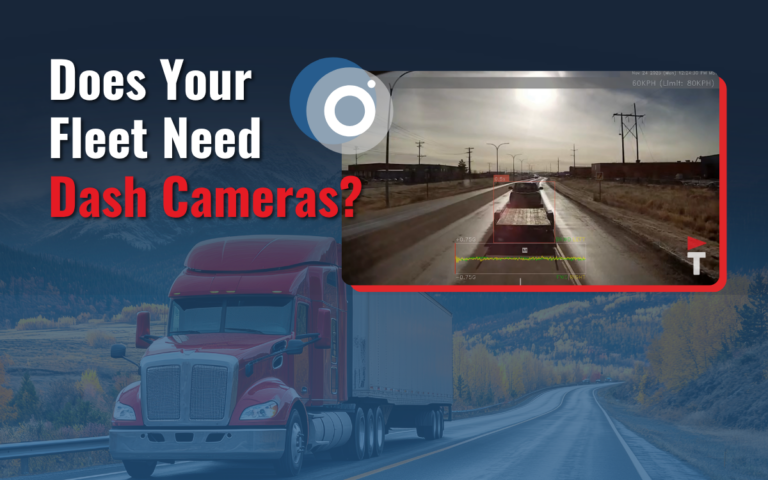
Commercial fleet safety is entering a new era in British Columbia.
The province has passed legislation that will require certain commercial vehicles to be equipped with forward-facing dash cameras. This could influence fleet regulations across Canada.
In a move that could influence fleet regulations across Canada, the B.C. Legislature has passed legislation that will require certain commercial vehicles to be equipped with forward-facing dash cameras. The bill received unanimous support across party lines and is expected to become law once formally signed and implemented.
For fleet operators, trucking companies, municipalities, and service fleets, the message is clear: dash cameras are no longer just a best practice—they are quickly becoming a compliance requirement.
Here’s what the new law means, who it affects, and how Titan GPS can help fleets stay compliant while improving safety and operational efficiency.
What Is British Columbia’s Dash Camera Law?
The Dashboard Cameras in Commercial Vehicles Act will require most large commercial vehicles operating in British Columbia to be equipped with a forward-facing dashboard camera that records whenever the vehicle is in use.
The CBC reports, the legislation was introduced by Kamloops-North Thompson MLA Ward Stamer after years of concerns surrounding serious commercial vehicle collisions throughout the province. The bill is designed to improve road safety, provide clear evidence following accidents, and help investigators determine what happened during roadway incidents.
According to the legislation:
- Commercial vehicles over 11,793 kilograms will be subject to the requirement.
- Cameras must be forward-facing.
- Recording must occur whenever the vehicle is operating.
- Drivers are responsible for ensuring cameras are functioning and unobstructed during operation.
- Additional technical requirements are expected through future regulations.
Reports surrounding the legislation indicate that required cameras must support:
- Minimum 1080p video resolution
- Night vision capability
- At least 72 hours of recording retention
- Continuous forward-facing recording while in operation
The law is expected to take effect approximately six months after receiving final approval, giving fleets a limited window to prepare.
Why Are Dash Cameras Becoming Mandatory?
For years, dash cameras have proven their value in commercial transportation.
When accidents occur, investigators, insurers, and law enforcement often rely on video footage to determine fault. In many cases, dash camera footage can:
- Protect professional drivers from false claims
- Speed up insurance investigations
- Reduce litigation costs
- Provide evidence for accident reconstruction
- Improve driver accountability
- Support fleet safety programs
The British Columbia Trucking Association has reported that roughly 75% of its members already utilize dash camera technology, demonstrating how widely adopted these systems have become within the industry. Users on Reddit are already commenting on the act, advocating for the use of cameras and their benefits even before things are set in stone
As safety regulations continue evolving, many industry experts believe British Columbia may be the first of several jurisdictions to adopt mandatory fleet camera requirements. Transport Canada has already acknowledged discussions regarding potential national standards.
For fleets operating throughout Canada and Alaska, investing in dash camera technology today can help future-proof operations against evolving compliance requirements.
Compliance Is Only Part of the Story
While the legislation focuses on video recording requirements, modern fleet cameras deliver much more than compliance.
Today’s AI-powered camera systems can help fleets:
- Reduce preventable accidents
- Identify risky driving behaviors
- Coach drivers in real time
- Lower insurance exposure
- Improve safety scores
- Protect company reputation
- Streamline incident investigations
For many organizations, the return on investment extends far beyond meeting regulatory requirements.
Why Are Dash Cameras Becoming Mandatory?
For years, dash cameras have proven their value across the transportation industry.
When accidents occur, investigators, insurers, and law enforcement agencies often rely on video evidence to determine what happened.
Video telematics solutions can help fleets:
- Protect drivers from false claims
- Accelerate insurance investigations
- Reduce litigation costs
- Improve driver accountability
- Support safety coaching initiatives
- Provide objective evidence following incidents
The British Columbia Trucking Association estimates that approximately 75% of its members already use dash camera technology.
Compliance Is Only Part of the Story
- Today’s AI-powered safety solutions can help fleets:
- Reduce preventable accidents
- Detect risky driving behaviors
- Coach drivers in real time
- Lower insurance exposure
- Improve safety performance
- Simplify claims management
- Protect company reputation
Titan GPS Fleet Camera Solutions
Titan GPS offers camera solutions tailored to the needs of your fleet. These features include:
- GPS tracking and dash camera in one device
- Road-facing video recording
- Driver alerts
- Optional auxiliary cameras
- Easy deployment
- AI-powered safety monitoring
- Driver coaching
- Driver scorecards
- Distraction detection
- Drowsiness monitoring
- Advanced safety analytics
Preparing for the Future of Fleet Safety
British Columbia’s new dash camera legislation represents more than a provincial regulation—it signals a broader shift toward increased fleet accountability and safety technology adoption.
Whether you’re operating commercial vehicles throughout British Columbia, across Canada, or into Alaska, now is the time to evaluate your camera strategy and ensure your fleet is prepared for emerging compliance requirements.
The good news? The right dash camera solution doesn’t just help you meet regulations—it helps protect your drivers, your business, and your bottom line.
Stay Ahead of the Mandate with Titan GPS
Titan GPS helps fleets throughout Canada and Alaska improve safety, simplify compliance, and gain greater visibility into their operations.
Whether you’re looking for a straightforward dash camera solution or a fully AI-powered safety platform, our team can help you find the right fit for your fleet.


